Best savings account, a crucial financial decision that can impact your future savings growth significantly, requires careful consideration of various factors such as interest rates, fees, and security measures. Let’s delve into the world of savings accounts to help you make an informed choice.
In this comprehensive guide, we will explore the different types of savings accounts available, the importance of interest rates and APY, minimum balance requirements, fees and charges, accessibility and convenience, customer service quality, deposit and withdrawal options, account security, automatic transfers, interest compounding, and special promotions and incentives.



Types of Savings Accounts
When it comes to saving money, there are several types of savings accounts to choose from. Each type has its own features, benefits, and drawbacks that cater to different financial goals and preferences.
Regular Savings Accounts
A regular savings account is a basic account offered by banks that allows you to deposit and withdraw money as needed. These accounts typically have lower interest rates compared to other types of accounts, but they are easy to open and maintain.
- Features:
Low minimum balance requirements
Easy access to funds
- Benefits:
Convenient for everyday transactions
Helps build a saving habit
- Drawbacks:
Low interest rates
May have fees for low balances
- Examples:
Bank of America Regular Savings Account
Chase Savings Account
High-Yield Savings Accounts
High-yield savings accounts offer higher interest rates than regular savings accounts, allowing your money to grow faster over time. These accounts are ideal for individuals looking to maximize their savings through better interest rates.
- Features:
Higher interest rates
May have minimum balance requirements
- Benefits:
Increased earning potential
Often no monthly fees
- Drawbacks:
May have restrictions on withdrawals
Higher minimum balance requirements
- Examples:
Ally Bank Online Savings Account
Citizens Access Online Savings Account
Money Market Accounts
Money market accounts combine features of checking and savings accounts, offering higher interest rates and limited check-writing capabilities. These accounts are suitable for individuals who want to earn more interest while still having easy access to their funds.
- Features:
Higher interest rates than regular savings accounts
Check-writing capabilities
- Benefits:
Higher interest rates
FDIC-insured for security
- Drawbacks:
May have minimum balance requirements
Limited number of withdrawals per month
- Examples:
Discover Bank Money Market Account
Capital One 360 Money Market Account
Interest Rates and APY
Interest rates play a crucial role in determining the growth of your savings in a savings account. When you deposit money into a savings account, the bank pays you interest on that money based on a certain percentage rate.
APY (Annual Percentage Yield)
APY, or Annual Percentage Yield, is the total amount of interest you will earn on your savings account in one year, taking into account the effect of compounding interest. It is a more accurate reflection of the interest you will earn compared to the simple interest rate.
- APY formula:
APY = (1 + (Interest Rate / n))^n – 1
- Significance of APY: APY allows you to easily compare the potential earnings of different savings accounts, regardless of the compounding frequency.
Factors Affecting Interest Rates
Interest rates on savings accounts can be influenced by various factors, including the current state of the economy, the Federal Reserve’s monetary policy, and the bank’s own financial health. Higher interest rates are typically offered during periods of economic growth.
Comparison of Interest Rates and APY
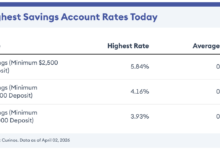
Different banks offer varying interest rates and APY for their savings accounts. It is essential to compare these rates to ensure you are maximizing your earnings. Some online banks may offer higher APY compared to traditional brick-and-mortar banks due to lower overhead costs.
Minimum Balance Requirements
Minimum balance requirements refer to the specific amount of money that account holders must maintain in their savings accounts to avoid fees or penalties.
Examples of Banks with Minimum Balance Requirements
- Chase Bank: Requires a minimum daily balance of $300 to avoid monthly fees.
- Bank of America: Requires a minimum balance of $500 to waive maintenance fees.
- Wells Fargo: Requires a minimum daily balance of $300 to avoid fees.
Impact on Account Holders
Failure to meet the minimum balance requirements can result in monthly maintenance fees being charged to the account. This can reduce the overall savings of the account holder.
Comparison of Minimum Balance Requirements
| Bank | Minimum Balance Requirement |
|---|---|
| Chase Bank | $300 daily balance |
| Bank of America | $500 balance |
| Wells Fargo | $300 daily balance |
Fees and Charges
When it comes to savings accounts, it’s important to be aware of the fees and charges that may apply. These fees can have a significant impact on your overall savings balance, so it’s crucial to understand them and take steps to minimize or avoid them whenever possible.
Common Fees Associated with Savings Accounts
- Maintenance fees: These are monthly fees charged for the upkeep of your account.
- Excess withdrawal fees: Some accounts limit the number of withdrawals you can make each month, and exceeding this limit may result in a fee.
- Minimum balance fees: If your account falls below a certain balance, you may incur a fee.
- ATM fees: Using an ATM outside of your bank’s network may result in a fee.
Impact of Fees on Overall Savings Balance
Fees can eat into your savings over time, reducing the amount of interest you earn and slowing down your progress towards your financial goals. It’s essential to keep an eye on fees and take action to minimize them.
Strategies to Avoid or Minimize Fees for Savings Accounts
- Choose a bank with no monthly maintenance fees.
- Maintain the minimum balance required to waive fees.
- Limit ATM usage to your bank’s network to avoid fees.
- Monitor your account regularly to ensure you stay within any withdrawal limits.
Banks Known for Transparent Fee Structures
Some banks are known for their transparent fee structures, making it easier for customers to understand and avoid fees. Examples of such banks include Ally Bank, Discover Bank, and Marcus by Goldman Sachs.
Accessibility and Convenience
In today’s fast-paced world, accessibility and convenience play a crucial role in choosing a savings account. Customers expect easy access to their funds and seamless banking experiences, whether online or in person.
Online vs. In-Person Banking
When it comes to savings accounts, online banking offers unparalleled convenience. Customers can manage their accounts anytime, anywhere, without the need to visit a physical branch. On the other hand, in-person banking provides a personal touch and face-to-face interaction that some customers prefer.
Features Enhancing Accessibility
- Mobile Banking: Many banks offer mobile apps that allow customers to check balances, transfer funds, and even deposit checks using their smartphones.
- ATM Access: Easy access to ATMs for cash withdrawals and deposits is essential for convenient banking.
- Customer Service Options: Round-the-clock customer support via phone, email, or live chat can enhance accessibility for customers needing assistance.
User-Friendly Online Platforms
Some banks excel in providing user-friendly online platforms for savings accounts. For example, Ally Bank’s online banking platform offers a simple and intuitive interface, making it easy for customers to manage their savings efficiently. Similarly, Discover Bank provides a seamless online experience with features like account alerts and budgeting tools to help customers stay on top of their finances.
Customer Service and Support
Customer service plays a crucial role in the context of savings accounts as it ensures that account holders have access to assistance and support whenever needed. Whether it’s resolving issues, answering queries, or providing guidance, good customer service can enhance the overall banking experience for customers.
Different Customer Support Channels
- Phone Support: Many banks offer a customer service hotline that account holders can call for assistance.
- Online Chat: Some banks provide online chat support through their website or mobile app for instant help.
- Email Support: Account holders can also reach out to banks via email for non-urgent inquiries or concerns.
- In-Person Support: Branch visits allow customers to speak directly with bank representatives for more personalized assistance.
Customer Service Quality Reviews
- Bank A: Known for prompt responses and helpful staff.
- Bank B: Mixed reviews with some customers praising the support while others complaining about long wait times.
- Bank C: High ratings for knowledgeable representatives and efficient problem-solving.
Tips for Evaluating Customer Service
- Read Reviews: Look for feedback from existing customers to gauge the quality of customer service provided by a bank.
- Test Response Times: Reach out to the bank via different channels to see how quickly they respond to your inquiries.
- Check Availability: Ensure that customer support is available during times that are convenient for you.
- Ask Questions: Pose questions about the account features or policies to assess the knowledge and helpfulness of customer service representatives.
Deposit and Withdrawal Options
When it comes to managing a savings account, understanding the deposit and withdrawal options is crucial. Let’s dive into the different methods available for funding a savings account and the withdrawal options that come with it.
Deposit Methods
- Direct deposit: Many banks offer the option to set up direct deposit from your employer, allowing your paycheck to be automatically deposited into your savings account.
- Mobile check deposit: With the advancement of technology, most banks now allow you to deposit checks remotely using your mobile device by simply taking a picture of the check.
- ATM deposits: You can also deposit cash or checks at ATMs that are affiliated with your bank.
Withdrawal Options
- ATM withdrawals: Most savings accounts offer the convenience of withdrawing funds from ATMs using a debit card linked to your account.
- Online transfers: You can transfer money from your savings account to another account online through your bank’s website or mobile app.
- In-person withdrawals: If you prefer to withdraw funds in person, you can visit a branch location of your bank and make a withdrawal at the counter.
Comparison of Deposit and Withdrawal Options
- Flexibility: Some banks offer a wide range of deposit and withdrawal options, while others may have limitations based on the type of account.
- Fees: It’s important to be aware of any fees associated with certain deposit or withdrawal methods, as they can vary from bank to bank.
- Speed: Consider the speed at which funds are available after a deposit or withdrawal, as some methods may be faster than others.
Banks with Flexible Options
- Chase Bank: Known for its user-friendly online and mobile banking platforms, Chase offers a variety of deposit and withdrawal options for customers.
- Ally Bank: With no physical branch locations, Ally Bank focuses on providing convenient online and mobile banking services, including easy deposit and withdrawal methods.
- Citibank: Citibank offers a range of deposit and withdrawal options, including access to a large network of ATMs for easy cash withdrawals.
Account Security and Insurance
Account security is a crucial aspect of savings accounts, ensuring that your hard-earned money is protected from unauthorized access and potential threats. Banks offer various security measures to safeguard your funds, providing peace of mind to account holders.
FDIC Insurance Coverage
The Federal Deposit Insurance Corporation (FDIC) plays a vital role in protecting funds in savings accounts. FDIC insurance covers up to $250,000 per depositor, per bank, per ownership category. In the event of bank failure, FDIC insurance ensures that your money is safe and secure.
Additional Security Measures
In addition to FDIC insurance, banks implement extra security measures to protect savings account holders. These measures may include encryption technology, multi-factor authentication, fraud monitoring, and secure online banking platforms. By employing these additional safeguards, banks aim to prevent unauthorized access and fraudulent activities.
Banks with Robust Account Security Features
Several banks prioritize account security and offer robust features to protect savings account holders. Examples of such banks include:
– Chase Bank: Utilizes advanced encryption technology and two-factor authentication for secure online banking.
– Bank of America: Offers identity theft protection services and real-time fraud monitoring to safeguard accounts.
– Wells Fargo: Implements biometric authentication and secure login protocols to enhance account security.
– Citibank: Provides account alerts, mobile app security features, and secure messaging options for enhanced protection.
Automatic Transfers and Savings Goals
Setting up automatic transfers for savings goals can be a game-changer when it comes to building a solid financial foundation. By automating the process of saving a portion of your income, you can ensure that you consistently set money aside towards your financial goals without having to think about it.
Automatic transfers help account holders stay disciplined with their savings by removing the temptation to spend the money instead of saving it. By transferring a set amount to your savings account automatically, you prioritize your savings goals and make it a regular habit, ultimately helping you reach your financial milestones faster.
Benefits of Automatic Transfers
- Consistent savings: Automatic transfers ensure that you save a fixed amount regularly, helping you build your savings over time.
- Discipline: By removing the need for manual transfers, automatic transfers instill discipline in your saving habits.
- Efficiency: Setting up automatic transfers saves time and effort, as you don’t have to remember to transfer money each time.
Tips for Using Automatic Transfers Effectively
- Set realistic goals: Ensure that the amount you transfer automatically aligns with your budget and financial goals.
- Review regularly: Periodically review your savings goals and adjust the automatic transfers as needed to stay on track.
- Consider multiple accounts: Create separate savings accounts for different goals and set up automatic transfers for each specific goal.
Banks Offering Tools for Setting and Tracking Savings Goals
- Chase Bank: Offers a feature called “Savings Goals” that allows you to set specific savings goals and track your progress.
- Ally Bank: Provides a “Boost Your Savings” tool that analyzes your spending patterns and suggests ways to increase your savings.
- Citibank: Offers a customizable savings goal tracker to help you visualize and achieve your financial goals.
Interest Compounding and Growth
Understanding how interest compounding works in savings accounts is crucial for maximizing your savings potential. When you earn interest on your initial deposit and on the accumulated interest over time, your money grows exponentially.
Accelerating Savings Growth with Regular Contributions
Regular contributions to your savings account can significantly boost your savings growth when combined with interest compounding. By consistently adding funds to your account, you increase the principal amount on which interest is calculated, leading to higher overall returns.
Impact of Compounding on Savings Over Time
Let’s consider an example: if you deposit $1,000 into a savings account with an annual interest rate of 5%, compounded monthly, after 5 years, your balance would grow to $1,276.28. The power of compounding becomes evident as your money earns interest on interest, not just on the initial deposit.
Strategies for Maximizing Interest Compounding
- Choose a savings account with a higher interest rate and more frequent compounding periods to accelerate growth.
- Opt for automatic transfers from your checking account to ensure regular contributions.
- Avoid withdrawing funds frequently to allow compounding to work its magic over time.
- Consider setting specific savings goals to stay motivated and focused on maximizing interest compounding.
Special Promotions and Incentives
When looking to open a savings account, it’s important to consider the special promotions and incentives offered by banks to attract customers. These promotions can vary from sign-up bonuses to higher interest rates, and they can provide additional value to your savings account. In this section, we will explore common promotions, the value they bring, and tips for evaluating their long-term benefits.
Common Promotions and Incentives
- Sign-up Bonuses: Many banks offer cash bonuses when you open a new savings account and meet certain criteria, such as depositing a minimum amount or maintaining the balance for a specified period.
- Higher Interest Rates: Some banks may provide promotional interest rates for a limited time to attract new customers. This can help your savings grow faster compared to regular rates.
- Fee Waivers: Banks may waive certain fees, such as monthly maintenance fees or ATM fees, for a specific period as a promotional offer.
Value of Promotional Offers
- Immediate Benefit: Sign-up bonuses and fee waivers can provide immediate financial benefits, putting extra money in your pocket from the start.
- Boost Savings Growth: Higher interest rates can accelerate the growth of your savings over time, helping you reach your financial goals faster.
Tips for Evaluating Long-Term Benefits
- Read the Fine Print: Make sure to understand the terms and conditions of the promotional offer, including any requirements or limitations.
- Compare Regular Rates: Evaluate how the promotional offer compares to the standard interest rates and fees of the savings account to assess its long-term value.
- Consider Your Needs: Choose a promotional offer that aligns with your savings goals and financial habits to maximize its benefits.
Closing Notes
Choosing the best savings account involves balancing various elements to suit your financial needs and goals. By understanding the nuances of different account types and features, you can make a well-informed decision that aligns with your saving objectives and preferences. Start exploring your options today to secure a better financial future.

Digital content creator with an eye for detail and a focus on trending global topics.